












NGS and PCR Diagnostics Applications
NGS and PCR Diagnostics Applications
We help you accelerate variant interpretation and clinical reporting by streamlining analysis workflows and applying deep genomics expertise, enabling you to launch and validate your assays quickly and with confidence.
Dockerized PacBio Workflows
Dockerized PacBio Workflows
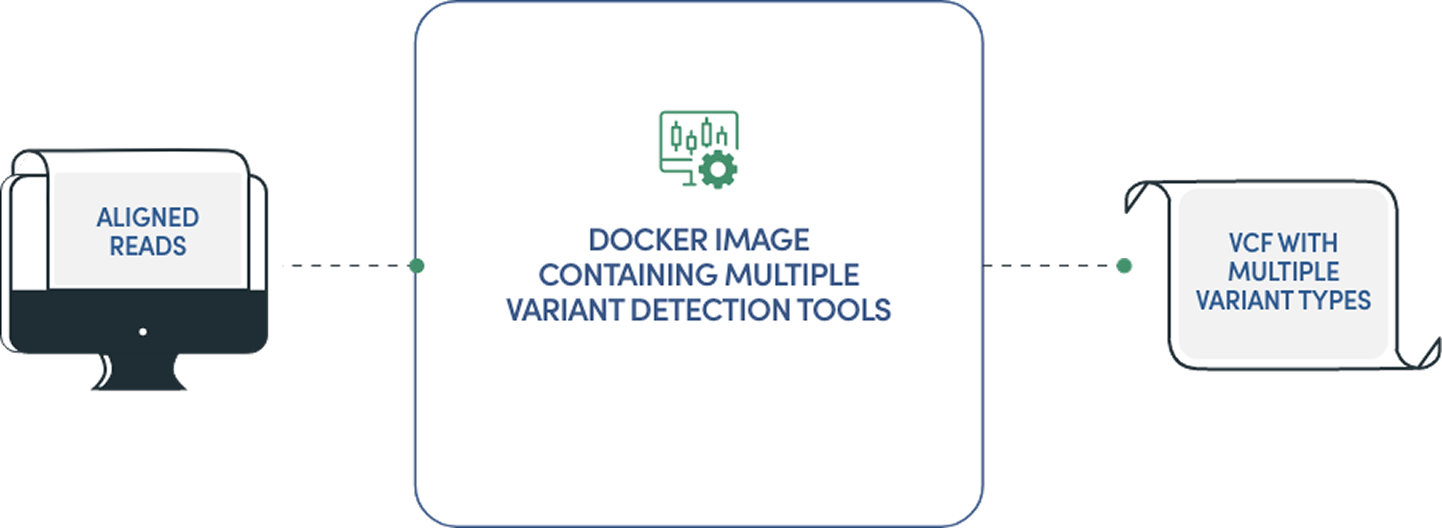
With the advent of long read sequencing solutions, such as Pacific Biosciences’ HiFi and Revio long read systems, many tools with varying dependencies, configurations and setups have been developed. Creating a workflow that harnesses these tools can lead to inconsistent environments, inefficiency in execution and fragmented outputs.
We recently created a unified Docker-based solution which streamlines tool execution, enabling consistent environments, parallel processing and simplified commands for efficient genomic analysis.
Variant Curation and Reporting
Variant Curation and Reporting
Our Variant Curation and Reporting services are powered by experience gained over tens of thousands of reports and a proven track record of variant curation under ACMG (germline) and AMP (somatic) guidelines. We help major Dx companies create curated variant databases or provide reporting-ready variant content.
Germline Variant Interpretation
Germline Variant Interpretation
Strand ORION
Strand ORION is Strand’s AI-powered germline interpretation and reporting suite, integrating StrandNGS, StrandOMS, StrandOmics, FestiVAR, autoMeta, Blitz and Siachen into a unified workflow from variant calling through clinical reporting. Developed using experience from over 20,000 clinical NGS reports and validated across more than 3,000 curated germline cases, ORION enables scalable, phenotype-driven interpretation and reporting. Its AI-powered prioritization reduces over 40,000 variants to a ranked shortlist of candidate genes, supporting efficient and standardized rare disease and inherited disorder reporting.
Strand-ORION: End-to-End Automated Reporting Workflow for Scalable Germline Reporting
Strand ORION provides an AI-driven ecosystem end-to-end automated reporting lifecycle:
Case Registration
FASTQ upload, de-identified clinical notes, and panel definitions via web UI or API. autoMeta extracts HPO terms from unstructured clinician notes text using AI.
01
Secondary Analysis
StrandNGS runs alignment and variant calling (SNPs/INDELs/CNVs/SVs, mitochondrial variants). QC pass cases proceed; borderline cases flagged.
02
Variant Prioritization
FestiVAR reduces the preliminary list of raw variants to a ranked top 25 genes shortlist leveraging HPO mapping, in silico predictors, and population frequency.
03
Interpretation and ACMG Classification
Scientists review the gene/variant views, apply ACMG classifications with a scoring engine. Blitz (AI-powered literature extraction) cuts manual review.
04
Draft Report Generation
Pre-defined templates, auto-generate structured reports once variants are selected. Lab-specific branding supported.
05
Review and Sign-out
Partner Lab Designated digitally approves. Reports are dispatched as PDF, JSON, or XML. StrandOmics + Siachen maintains full audit trail. Sacred: manages pipeline orchestration end-to-end.
06
FASTQ upload, de-identified clinical notes, and panel definitions via web UI or API. autoMeta extracts HPO terms from unstructured clinician notes text using AI.
StrandNGS runs alignment and variant calling (SNPs/INDELs/CNVs/SVs, mitochondrial variants). QC pass cases proceed; borderline cases flagged.
FestiVAR reduces the preliminary list of raw variants to a ranked top 25 genes shortlist leveraging HPO mapping, in silico predictors, and population frequency.
Scientists review the gene/variant views, apply ACMG classifications with a scoring engine. Blitz (AI-powered literature extraction) cuts manual review.
Pre-defined templates, auto-generate structured reports once variants are selected. Lab-specific branding supported.
Partner Lab Designated digitally approves. Reports are dispatched as PDF, JSON, or XML. StrandOmics + Siachen maintains full audit trail. Sacred: manages pipeline orchestration end-to-end.
StrandOmics, Festivar, and Blitz together power Strand’s AI-driven germline interpretation workflow. Together, they combine tertiary analysis, phenotype-to-gene prioritization, and automated literature evidence mining to help teams move rapidly from VCFs to the top 10 most relevant variants, reducing manual review and turnaround time.
Strand Omics
StrandOmics is a proprietary clinical genomics interpretation and reporting platform for germline variant curation, tertiary analysis, and clinical report generation. It combines curated knowledge, integrated annotation, variant prioritisation, and workflow support to enable scalable interpretation and reporting for hereditary cancers, Mendelian disorders, and rare inherited diseases.
Key features:
- VCF-based variant interpretation, curation, and reporting through a secure web-based interface
- Integrated annotation from major public and proprietary knowledge sources, including ClinVar, OMIM, UniProt, dbSNP, 1000 Genomes, ExAC, and PubMed
- Sequence conservation analysis across 46 species
- Automated variant prioritisation and pre-classification using inheritance model, phenotype, conservation, and internal pooled patient data
StrandOmics is a core component of Strand ORION, Strand's germline interpretation and reporting suite developed using experience from over 20,000 clinical NGS reports and more than 3,000 curated germline cases.
festiVAR
festiVAR (Fast Estimation of Variants for Automated Reporting) is an AI-powered variant prioritization engine designed to accelerate germline variant interpretation from whole exome and genome sequencing data. Integrated within the Strand ORION ecosystem, festiVAR combines genomic evidence, phenotype-driven analysis, clinical attributes, and machine learning to rapidly identify clinically relevant variants while reducing the manual effort required for rare disease interpretation.
Key features:
- Automated prioritization of 40,000+ SNVs and indels per exome, with integrated CNV analysis
- Phenotype-driven prioritization using HPO normalization and gene–disease associations
- Integration of ClinVar, gnomAD, in silico prediction tools, and Strand's internal knowledgebase
- GPT-based genotype–phenotype matching trained on 1,400+ curated correlations
- Support for rare disease, inherited disorder, WES, and WGS workflows
In a validation study of 996 cases, the reported variant ranked within the top 25 genes in 99.93% of cases. Its LLM-based genotype–phenotype matching model achieved 98.4% prediction accuracy.
Blitz
Blitz is an AI-powered literature intelligence engine that accelerates germline variant interpretation by automating literature retrieval, evidence extraction, and ACMG evidence assessment. Integrated within the Strand ORION ecosystem, Blitz combines large language models (LLMs), retrieval-augmented generation (RAG), and automated scientific literature mining to reduce the manual effort required for variant curation while maintaining ACMG-compliant interpretation workflows.
Key features:
- Automated PubMed and PubMed Central searches for gene- and variant-specific evidence
- SynVar nomenclature normalization to harmonize gene and variant aliases and maximize literature coverage
- LLM- and RAG-powered extraction and summarization of evidence from abstracts and full-text publications
- Direct mapping of literature evidence to ACMG criteria, including PS3/BS3 and PP1/BS4
- Structured evidence summaries for rapid variant review and interpretation
Blitz uses GPT-powered evidence extraction and ACMG-guided reasoning, reducing manual literature review effort by 40–60%.
Strand Omics
StrandOmics is a proprietary clinical genomics interpretation and reporting platform for germline variant curation, tertiary analysis, and clinical report generation. It combines curated knowledge, integrated annotation, variant prioritisation, and workflow support to enable scalable interpretation and reporting for hereditary cancers, Mendelian disorders, and rare inherited diseases.
StrandOmics has the following features:
- VCF-based variant interpretation, curation, and reporting through a secure web-based interface
- Integrated annotation from major public and proprietary knowledge sources, including ClinVar, OMIM, UniProt, dbSNP, 1000 Genomes, ExAC, and PubMed
- Sequence conservation analysis across 46 species
- Automated variant prioritisation and pre-classification using inheritance model, phenotype, conservation, and internal pooled patient data
StrandOmics is a core component of Strand ORION, Strand’s germline interpretation and reporting suite developed using experience from over 20,000 clinical NGS reports and more than 3,000 curated germline cases. It supports scalable germline reporting programs by combining interpretation, curation, and reporting in a single platform, helping standardize workflows across hereditary cancer, rare disease, and inherited disorder testing.
festiVAR
festiVAR (Fast Estimation of Variants for Automated Reporting) is an AI-powered variant prioritization engine designed to accelerate germline variant interpretation from whole exome and genome sequencing data. Integrated within the Strand ORION ecosystem, festiVAR combines genomic evidence, phenotype-driven analysis, clinical attributes, and machine learning to rapidly identify clinically relevant variants while reducing the manual effort required for rare disease interpretation.
festiVAR has the following features:
- Automated prioritization of 40,000+ SNVs and indels per exome, with integrated CNV analysis
- Phenotype-driven prioritization using HPO normalization and gene–disease associations
- Integration of ClinVar, gnomAD, in silico prediction tools, and Strand's internal knowledgebase
- GPT-based genotype–phenotype matching trained on 1,400+ curated correlations
- Support for rare disease, inherited disorder, WES, and WGS workflows
festiVAR generates a ranked shortlist of approximately 25 candidate genes per case. In a validation study of 996 cases, the reported variant ranked within the top 25 genes in 99.93% of cases and within the top 12 genes in 100% of cases. Its LLM-based genotype–phenotype matching model achieved 98.4% prediction accuracy, helping reduce manual review effort and accelerate variant interpretation.
Blitz
Blitz is an AI-powered literature intelligence engine that accelerates germline variant interpretation by automating literature retrieval, evidence extraction, and ACMG evidence assessment. Integrated within the Strand ORION ecosystem, Blitz combines large language models (LLMs), retrieval-augmented generation (RAG), and automated scientific literature mining to reduce the manual effort required for variant curation while maintaining ACMG-compliant interpretation workflows.
Blitz has the following features:
- Automated PubMed and PubMed Central searches for gene- and variant-specific evidence
- SynVar nomenclature normalization to harmonize gene and variant aliases and maximize literature coverage
- LLM- and RAG-powered extraction and summarizationof evidence from abstracts and full-text publications
- Direct mapping of literature evidence to ACMG criteria, including PS3/BS3 and PP1/BS4
- Structured evidence summaries for rapid variant review and interpretation
Blitz uses GPT-powered evidence extraction and ACMG-guided reasoning to automate some of the most labor-intensive steps in variant curation. Blitz enables faster variant assessment, improved curator productivity, and scalable interpretation across rare disease and inherited disorder programs by reducing manual literature review effort by 40–60%.
Somatic Variant Interpretation
Somatic Variant Interpretation
Strand Somatic
Knowledgebase
Strand Somatic Knowledgebase is a clinically curated oncology knowledgebase that supports somatic variant interpretation, AMP tier classification, therapy annotation, and clinical reporting. Strand Somatic Knowledgebase reflects more than 10 years of oncology curation experience and helps laboratories deliver consistent, clinically actionable somatic reports.
Strand Somatic Knowledgebase has the following features:
- 20,000+ curated variants across 600+ cancer genes
- AMP Tier I–IV classification support
- SNVs, indels, CNVs, fusions, MSI, TMB, and HRDCoverage of
- Integrated FDA, NCCN, clinical trial, and public database evidence
- 95% concordancewith an FDA-approved oncology knowledgebase
Strand Somatic Knowledgebase has been developed and continuously refined over a decade of clinical curation and powers thousands of oncology reports generated by Strand's interpretation team.
Strand’s somatic interpretation workflow stands apart through its AMP-based tiering framework and therapy rules engine, embedded in StrandOmics and Strand Iris to accelerate turnaround time from sequencing to high-confidence, actionable treatment recommendations.
AMP Tier
Classification
Strand’s AMP tiering framework supports structured classification of somatic variants into clinically relevant evidence tiers, enabling consistent, scalable interpretation across oncology cases. Integrated within StrandOmics and Strand Iris, it combines curated evidence with automated tier assignment to accelerate review, standardize reporting, and support faster turnaround times.
Key features:
- AMP/ASCO/CAP-aligned tiering framework for consistent classification of somatic variants into Tier I–IV categories
- Automated tier assignment within Strand Irisreduces manual interpretation effort and speeds case review
- Supports high-throughput reporting workflows,helping teams maintain quality while scaling volume and TAT
- Curated evidence-backed classification spanning therapeutic, diagnostic, prognostic, and functional relevance
SOC Therapy Rules
Engine
Strand’s rules engine links somatic variants and variant classes to therapy recommendations using codified SOC logic, including sensitivity/resistance associations, documented exceptions, and co-occurring variant effects. Built on Strand’s curated somatic knowledgebase, it enables faster, more nuanced, and clinically actionable oncology reporting at scale.
Key features:
- Rules-based therapy matchingconnects variants to standard-of-care drugs and expected response patterns
- Automated tier assignment within Strand Irisreduces manual interpretation effort and speeds case review
- Supports high-throughput reporting workflows,helping teams maintain quality while scaling volume and TAT
- Curated evidence-backed classification spanning therapeutic, diagnostic, prognostic, and functional relevance
AMP Tier Classification
Strand’s AMP tiering framework supports structured classification of somatic variants into clinically relevant evidence tiers, enabling consistent, scalable interpretation across oncology cases. Integrated within StrandOmics and Strand Iris, it combines curated evidence with automated tier assignment to accelerate review, standardize reporting, and support faster turnaround times.
Key features:
- AMP/ASCO/CAP-aligned tiering framework for consistent classification of somatic variants into Tier I–IV categories
- Automated tier assignment within Strand Iris reduces manual interpretation effort and speeds case review
- Supports high-throughput reporting workflows, helping teams maintain quality while scaling volume and TAT
- Curated evidence-backed classification spanning therapeutic, diagnostic, prognostic, and functional relevance
SOC Therapy Rules Engine
Strand’s rules engine links somatic variants and variant classes to therapy recommendations using codified SOC logic, including sensitivity/resistance associations, documented exceptions, and co-occurring variant effects. Built on Strand’s curated somatic knowledgebase, it enables faster, more nuanced, and clinically actionable oncology reporting at scale.
Key features:
- Rules-based therapy matching connects variants to standard-of-care drugs and expected response patterns
- Captures combination logic and co-occurring variant effectsenabling more nuanced recommendations than simple one-variant/one-drug associations
- Supports faster generation of actionable therapy recommendationsby reducing repetitive manual evidence synthesis
- Built on a somatic knowledgebase with 20,000+ curated variants across 600+ genes helping drive consistency and scalability in reporting
NGS Assay Validation (CAP/CLIA/CDx)
NGS Assay Validation (CAP/CLIA/CDx)
We have reliable expertise in establishing limits of detection, sensitivity, specificity, and reproducibility for various variant types in somatic, germline, and liquid biopsy settings. Our services include:
- Generation of data using appropriately sourced control samples (from commercial sources as well as from our own internal library of samples)
- Analysis of data generated by our customers to deliver analytical and clinical validation reports for CLIA, CAP and NY State certification
Software Service Teams
Software Service Teams
Our software service teams help our customers streamline and automate their lab processes, including for ex.:
- Deployment and scale-up of secondary analysis (fastq to variant calls)
- Streamlining of tertiary analysis (variant calls to reports)
- Ordering and report delivery (physician portals)
- Supporting research infrastructure (e.g., EDC systems for clinical research, aggregate data pools for mining)
Frequently Asked Questions
Frequently Asked Questions
Let's Connect
Let's Connect

download the case study.